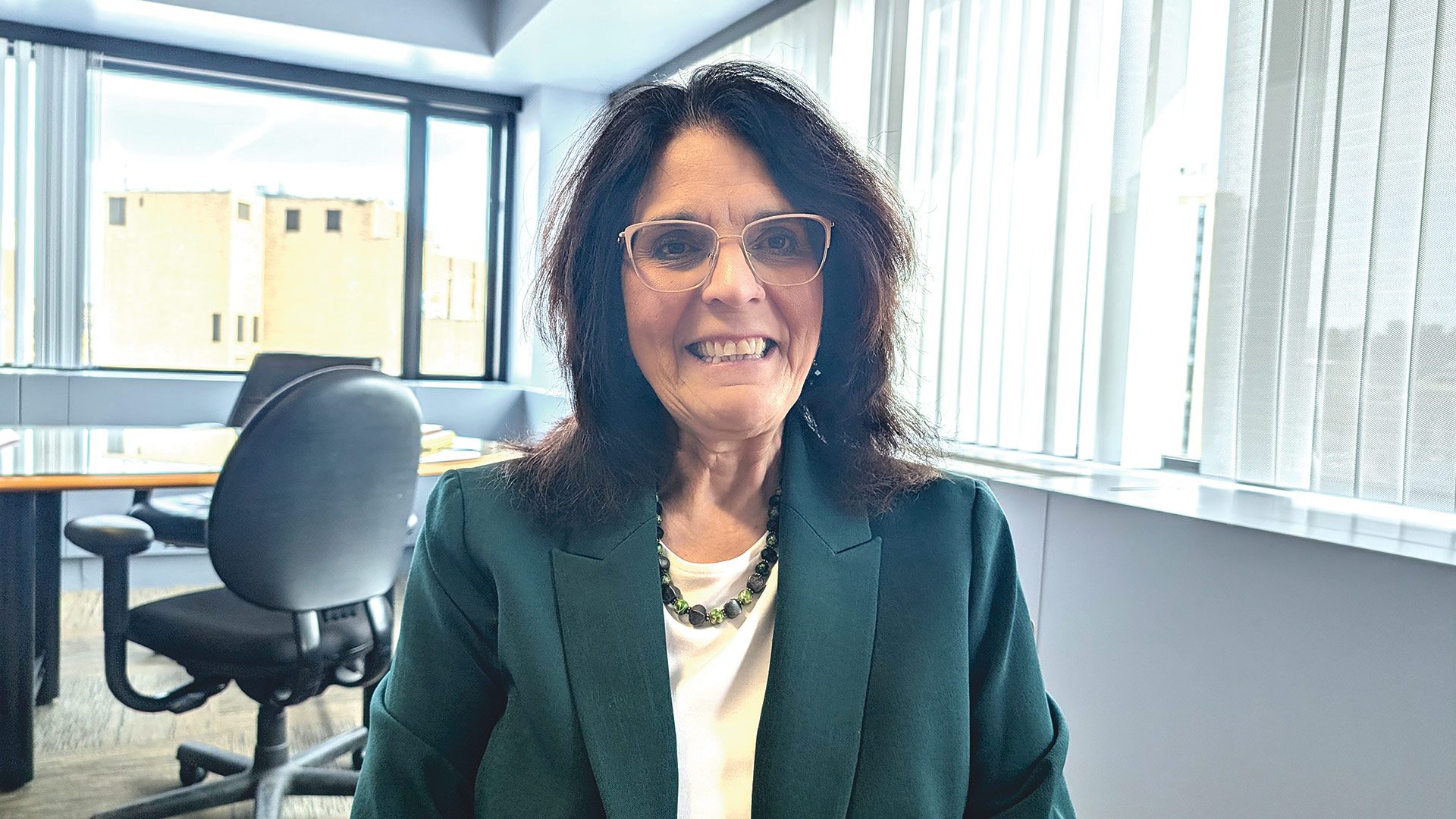
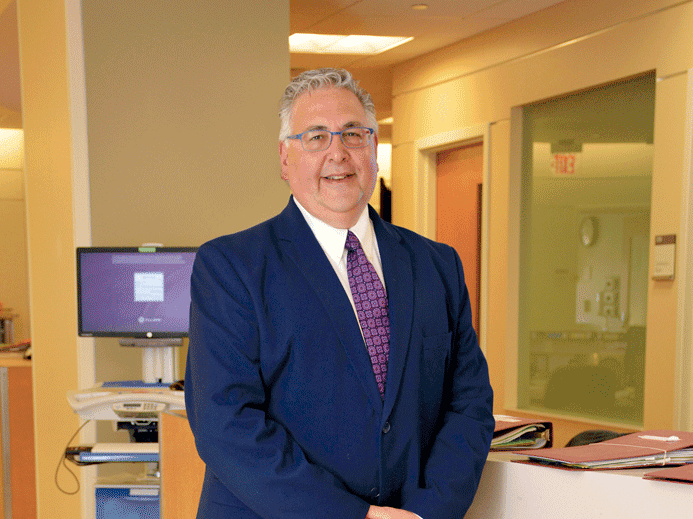
Lois Nesci says Gándara Center has its finger on the pulse of where regional mental health needs exist, and strives to meet them through a broad array of programs.
When Shelley Zimmerman arrived at MiraVista Behavioral Health Center in Holyoke in 2023, the facility had 56 inpatient adult beds.
Now, with the opening of 10 new beds only a few weeks ago, there are 98 in all, including 16 for adolescents.
“We’re planning for more in the future,” said Zimmerman, MiraVista’s hospital administrator. “Of those 98 beds, I’m running 95% full every single day. We’re full all the time.”
The reason is simple. “Across the region, we’re seeing sustained demand outpacing inpatient behavioral health capacity, particularly for high-acuity or dual-diagnosed patients. So length of stays are being extended due to that. And emergency departments are kind of a bottleneck. My background is as an emergency room nurse, so I understand what that’s like for patients and for the hospital system; it reinforces the need to expand beds.”
Larger behavioral health organizations are seeing similar needs and responding accordingly. Lois Nesci, CEO of Springfield-based Gándara Mental Health Center, recently spoke with BusinessWest about that growing health system, which now boasts 70 different locations with 1,100 staff serving 18,000 people statewide.
“We look at that all the time — we look at where is the need, do we have the expertise to offer something, where is it in the geographical area, and do we have the capacity?”
“We’re very fortunate to have this kind of presence and the ability to offer services,” she said — and those services are broad. They include:
• Behavioral health, which encompasses a broad array of clinical and substance use services for adults, families, children, and adolescents, including individual and group psychotherapy, diagnostic assessments, and treatment;
• Youth, young adult, and family services, including children’s behavioral health, foster care, and youth and young adult residential homes;
• Substance use and recovery, with services include recovery coaching, peer recovery centers, and long-term residential treatment for men, women, and young adults with substance use disorder and co-occurring mental health disorders;
• Community and prevention, including health education programs and initiatives that provide resources and information addressing numerous public health areas while representing the multicultural needs of the region; and
• Intellectual and developmental disability services, which promote the health and well-being of adults with intellectual and developmental disabilities and those with behavioral health and/or substance use disorders.
“We have our finger on the pulse. We know where the needs exist,” Nesci said, noting that some of this is anecdotal data from program participants themselves, while Gándara also works with the state and other entities to determine where the gaps are, and strive to fill them.
Shelley Zimmerman
“Across the region, we’re seeing sustained demand outpacing inpatient behavioral health capacity, particularly for high-acuity or dual-diagnosed patients.”
“We look at that all the time — we look at where is the need, do we have the expertise to offer something, where is it in the geographical area, and do we have the capacity?”
Take the organization’s residential recovery services, which include seven transitional homes across the state, soon to be eight with one coming online in South Hadley.
“The homes are designed to help individuals who are getting ready to transition into the community to have a place to live, be able to secure employment and housing, and maintain their sobriety before they move back into the community,” Nesci said.
Cutchins Programs for Children and Families in Northampton is another regional mental health organization evolving with growing need. It recently held a ribbon-cutting ceremony to celebrate the opening of the first floor of its Children’s Clinic, an expansion that increases access to outpatient mental healthcare for children and families in Western Mass.
Meanwhile, Springfield-based Behavioral Health Network (BHN) continues to add programs to meet growing needs. For example, in January, it launched a Family-based Intensive Treatment (FIT) program, which expands the organization’s commitment to delivering behavioral healthcare to children, youth, and families through a community-centered approach.
The FIT program helps families in crisis to stabilize by providing intensive, home-based support. Each family is supported by a dedicated team that provides clinical support, 24/7 availability, and peer support from someone with lived experience. The team teaches practical skills to help children thrive at home and connects families with community resources for long-term success.
Michelle Michaelian
“FIT expands the continuum of care within BHN’s child and family programs, ensuring families receive intensive, home-based support when they need it most. These programs reflect our commitment to building stronger, healthier communities.”
“FIT expands the continuum of care within BHN’s child and family programs, ensuring families receive intensive, home-based support when they need it most,” said Michelle Michaelian, senior vice president of Child and Family Community-Based Programs. “These programs reflect our commitment to building stronger, healthier communities.”
On the Front Lines
At MiraVista, Zimmerman said, services for adults and adolescents range from inpatient psychiatric treatment to outpatient substance abuse services. Its direct admission model allows patients to be admitted directly, often from outpatient resources and community mental health crisis centers.
“It eliminates some of that bottlenecking that I mentioned that happens in the emergency room. It reduces delays, and it lowers stress for patients and families,” she explained. “We’re the subject matter experts, essentially. When patients come to us for care, they experience care that’s therapeutic and patient-centered. An ER is a very difficult place for someone in a mental health crisis.”
But to provide that care effectively, organizations need to provide appropriate levels of staffing, and that can be a hurdle. Zimmerman understands the challenges of being a behavioral health nurse, but she also touts the personal rewards.
“It’s very gratifying to help someone go from their very lowest to stable and able to function and be part of society again,” she told BusinessWest, adding that there’s an intuitive quality that comes into play when diagnosing and treating this population — one that people at home don’t really have.
“We understand if someone has a cardiac issue; we understand if someone has diabetes; we don’t seem to understand mental health,” she said. “It takes intuition, it takes compassion, it takes care to help these patients, and an understanding of mental health and what that looks like. So they come in at their worst, at their lowest, and then you get to support them, lift them up, and help get them back so that they can function and integrate with their families, with their jobs, with their lives.”
One of the biggest challenges of the job is being able to handle both physical and mental wellness, as many patients have co-morbid conditions, Zimmerman added. Meanwhile, the reasons professionals choose this path vary.
“A lot of times, folks are drawn to this aspect of nursing because they have a family member that suffered with mental health, or they have a loved one that tried to commit suicide, or a friend.”
And adolescents are dealing with more pressures today than in years past because of how technology and social media have turned peer pressure and bullying into a 24/7 experience.
“Kids don’t know how to handle that. And it can be very upsetting for a parent if a child is starting to become reclusive, maybe not eating as much, doesn’t want to go to school because there’s cyberbullying stuff that’s going on, the social media stuff. We help our staff understand what those things are, how they impact our patients, and then how they can help our patients.”
For both adults and young people, she added, there remains some stigma around seeking mental healthcare, though conversations are more open and frequent than they were decades ago.
“People are hesitant to tell their jobs if they need time off to seek treatment. And they’re hesitant to seek that treatment, whether it’s for addiction services or mental health,” Zimmerman said. “I think it’s getting better, but there’s a lot of opportunity for more global understanding of how mental health affects your total person. I tell our team here all the time, ‘mental health doesn’t discriminate, and neither do we.’ And by that I mean, it can be your neighbor, it can be your pastor, it can be your grandma, it can be a famous athlete, it can be your mother, it can be anybody. It could be you.”
“It’s very gratifying to help someone go from their very lowest to stable and able to function and be part of society again.”
Nesci also said she has seen more willingness from people to either self-identify or say a family member needs help.
“People who know that I work in this industry often ask me, ‘how can I help my friend, my nephew, my niece, my sister, my brother?’ So people talk about it. Years ago, it was never spoken of. I think we’ve come a really long way.
“At the same time, there’s a lot of bias that still exists because people make judgments about the people we serve — the way they look, the way they dress, the language they speak, whether they’re employed, all that stuff,” she added. “So we still have a long way to go.”
Changing Lives
As it approaches its 50th anniversary next year, Gándara continues to add programs and services where it sees a need. For instance, a few years ago, it invested in transcranial magnetic stimulation (TMS), a non-traditional method of managing depression for patients who have not been successful with other modalities.
“Substance use is another big need,” Nesci said. “More and more people are identifying as having that as a major issue or stressor in their lives. So we need people where they’re at, which is why we’re providing recovery coaching services to people in the community.”
As Zimmerman noted earlier, a lot of this capacity building comes down to staffing. “Staff is our greatest resource — without staff, we can’t provide the services,” Nesci added. “So I have a great team that is focused on hiring and retaining people.”
In the end, meeting these critical needs in the community, especially at a time of such demand, is challenging work to be sure, but can also be tremendously rewarding.
“I believe that people have the ability to change behavior, and I have a team that believes the same thing,” Nesci said. “That’s what I find most gratifying — when we hear the stories of people who have gone through our program. That’s really heartwarming.”