
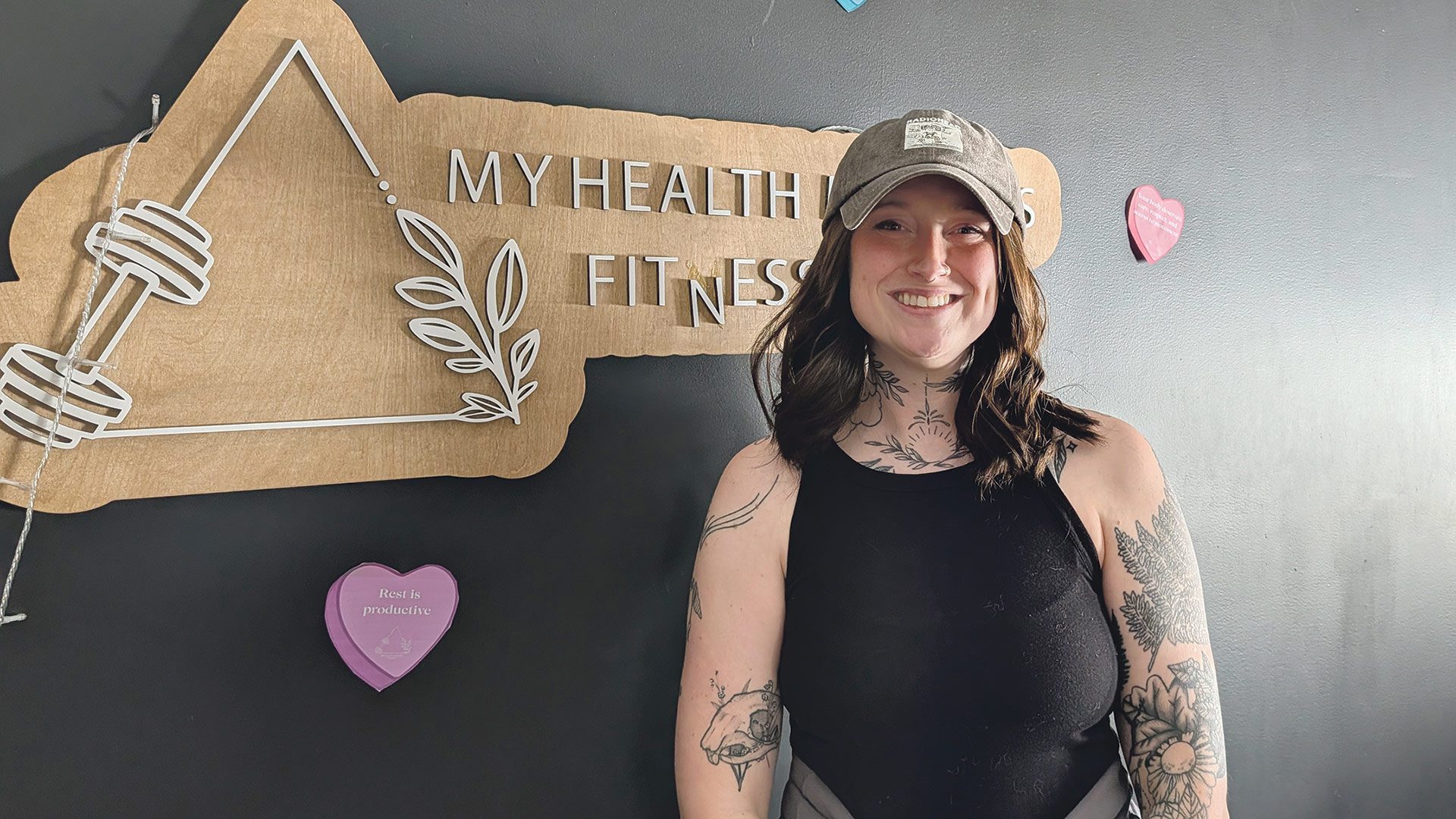
Britt McGrath Helps People Achieve Healthy Bodies — and Healthy Self-image
Creating a Movement

In her bio on the website of My Health Matters Fitness, Britt McGrath makes it clear what she thinks of ‘diet culture.’
“I have been on a decades-long journey of learning to look at my body for everything it is, rather than everything it is not. And through years of certifications, training, and actual hands-on work, I’ve found my purpose. I’ve found my worth again,” she wrote. “And that is to help other people who have had similar histories as mine give diet culture and all of its toxic friends a huge middle finger — to finally start living our lives in ways that do not revolve around how our bodies look, but rather everything else life has to offer.”
Now in her sixth year of helping a growing roster of clients make fitness and wellness work for them, she believes in that philosophy even more.
In short, too many people have been let down by a fitness and diet industry that puts too much emphasis on weight numbers and body shape, and have grown up in a society that overly focuses on the way they look, and places all the value on that, McGrath told BusinessWest during a broad conversation at her Hadley fitness studio.
“For as long as I can remember, I always fixated on my body. I was an athlete for many years, and I felt strong, but once I stopped playing, that’s when my eating disorders started happening because I didn’t know how to control my body anymore,” she said. “And over the years, as I started healing my own body image, I started making more connections with other people speaking out and letting me know they’ve also experienced that.”
“Over the years, as I started healing my own body image, I started making more connections with other people speaking out and letting me know they’ve also experienced that.”
My Health Matters contains many trappings of a traditional gym — weights, circuit training, boxing, group classes, personal training, and much more — but with a few key differences, from a lack of mirrors to a deliberate de-emphasis on number of pounds lost. Instead, fitness plans are individualized to each member’s needs, goals, and body type, with an emphasis on improving quality of life rather than chasing specific numbers.
“We’ve created a community of people who have been wanting something like this, to be able to escape a lot of what they’re exposed to in other places or by their own families and friends — whoever is telling them, ‘you have to look a certain way, or else you’re unhealthy,’” McGrath explained.

“A lot of folks are coming in and saying, ‘thank God there’s a place where I can just be me. I can say no to a movement that I don’t want to do. I can flip off the trainer if I want to. I can leave halfway through class if I feel like that’s what I needed.’ And I think the bodily autonomy of it, being able to make those choices without shame or guilt, is really important for us here.”
It’s an idea she’s become passionate about, and which drove her to create a safe space that’s welcoming to all body types — and women and men of all ages and backgrounds who want to express themselves and find their own path to wellness.
“I think it’s important to go against the grain a little bit,” McGrath said. “How many centers are talking about, ‘lose the weight,’ ‘burn this off,’ ‘eat this.’ There’s constantly another diet, another thing that’s coming up. But if all these diets were supposed to work, then why haven’t they worked? It’s because they’re not supposed to work, and they’re damaging to our bodies, and they’re damaging to our mental health. And they make us feel like failures if nothing happens.
“And also, why do we have to lose the weight? Why do feel like we have to hate our bodies if they don’t fit into a little box that society has deemed as appropriate this year? And that changes every year. I just felt like this needed to change,” she went on. “We have many amazing companies in our area, and a lot of personal trainers that I started getting to know as I was developing this space, who are practicing these things, but only in bits and pieces.”
Body Talk
McGrath didn’t always intend to work in this field; she has a background in environmental studies. But in many ways, fitness was always at the back of her mind.
“I was an athlete growing up; soccer was my baby. I ended up playing lacrosse for a few years, but soccer was always at the forefront.”
She picked up soccer at age 9 because a close friend was playing, and she wound up competing in a municipal league in Belchertown, then Belchertown High School, and was scouted by colleges — but a knee surgery early in her college career shut everything down. She did wind up coaching soccer at the high school level, which she enjoyed.
“Playing sports always felt really at home for me and made me feel connected to my body — but then, also disconnected, because I didn’t know how to feed it and how to take care of it when I wasn’t being an athlete.”

Seeking to get back in touch with what she enjoyed about movement, McGrath started working as a spin instructor at Energia Fitness in Hadley, now known as 50/50 Fitness/Nutrition. Later, she became a high school physical education teacher and a personal trainer, before launching her own business in 2020 that started with remote classes and home visits, before she hung out a shingle on Route 9 in October 2023.
“What I love is teaching folks, helping people see that there’s always potential, there’s always a possibility of finding a way that feels good in your body rather than feeling like you’re stuck. You should never feel stuck,” she said. “There should always be another option that someone can provide you so you’re like, ‘wow, look how cool my body is doing these things.’ That’s what I want to teach people — I want people to experience how good it can feel to be like, ‘my body is cool,’ rather than, ‘what’s wrong with me all the time?’
“We don’t need that, especially with everything going on these days,” she went on. “The last thing we need is feeling bad about ourselves continuously. So fitness is an opportunity to be able to connect with our bodies and with other like-minded folks and be like, ‘yeah, let’s do this.’”
Having struggled with body image and eating disorders in her past, McGrath is convinced that, had she encountered a role model with a body-positive take on fitness, her experiences might have been very different — and she wants to be that kind of positive influence for her club members today.
“I wanted this to be inclusive — different bodies, different identities, different lived experiences. We wanted to have a lot of variety for folks to be able to choose what works best for their bodies,” she explained. “So we have a mix of some higher-engaging classes like spin classes and boxing and strength classes. And then we wanted classes that have a sweet balance of making sure that you’re not just like beating your body into submission to feel like your value based on that — so we have mat pilates, yoga, we’ve even had meditation in the past. Bar classes are also nice because they work the smaller muscle groups and help keep your joints supported in those ways that you might not in the larger muscle groups.”
“I hear so many stories from our clients about the crap they’ve dealt with. Then they connect with other community members and are like, ‘my God, that happened to you too.’ And then they become closer.”
Aubrey Endress gets to the heart of choosing the right activities in a recent post about ‘joyful movement’ on the My Health Matters Fitness blog.
“Whether you’re walking with a friend, dancing solo to your favorite song in the kitchen, or finding your center in a yoga class, finding joyful movement establishes a level of trust within ourselves. You are taking the time to really listen to your body and respect it by choosing movement that supports what you need in the moment. No guilt, no shame, no punishment — just connection with what your body truly will benefit from.”
McGrath loves seeing members, many of whom have been scared off by other gyms and who have struggled with body image, find their connection — and a new passion for movement.
“I hear so many stories from our clients about the crap they’ve dealt with. Then they connect with other community members and are like, ‘my God, that happened to you too.’ And then they become closer,” she told BusinessWest. “I think it’s so needed. To be able to make those connections with like-minded folks is really important for a lot of us. And it’s really beautiful to see.”
Down to Business
McGrath reiterated more than once that opening a physical location and bringing on employees — she has 14 of them now — has been challenging and scary, but also deeply gratifying.
“I was terrified to do it — still am, sometimes. At the beginning, I really was trying to figure out what was best for my mental health and how to mix the balance of work and my personal life. With the pandemic, my mental health got pretty bad, and that gave me some perspective of what I was looking to do.
“Then a lot of my clients were starting to express that they wanted to lift heavier weights and be able to go somewhere and do that. That was at a time where a lot of us were saying, ‘OK, maybe we can start going out in public more.’”
She has partnered with other like-minded businesses, like Happy Valley Nutrition, a group of dietitians who, led by founder Amanda Mittman, also promote an anti-diet, weight-inclusive view of fitness and wellness.
“I love connecting with people and making people feel strong and validated in their experiences and their bodies,” McGrath said. “A lot of times, we go through the world thinking that everyone either hates our bodies or sees things about our bodies that aren’t there, and we develop bad body image or eating disorders.
“A lot of people have specifically sought us out because they’re like, ‘you’re different. This is cool.’ This is something they’ve actually been wanting to do, but might not have had the means yet. Or they’re looking for something that can heal their own trauma with movement. I say all the time that I needed this growing up so I could have healed my relationship with my body and my mind. And a lot of people working for us have specifically come here to help people with that.”
Clearly, McGrath has figured out that relationship for herself, and is passionate about helping others get there as well.
“I think this is the first job I’ve had where my cup is filled after I leave, rather than being completely depleted,” she said. “I feel very grateful. I mean, owning a business is no joke. That can be draining. The people are not.”