
Hospital Administrators Say 2026 Will Pose Stern Challenges
Gauging the Ripple Effects
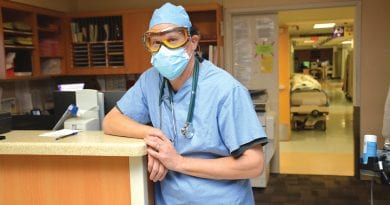
When he came to Holyoke Medical Center as its new president and CEO in 2013, Spiros Hatiras considered it the proverbial best-kept secret.
By most all accounts, it isn’t that any longer.
“It took us a decade or so, but we’re no longer a secret,” he said, meaning that healthcare professionals have found the facility and helped make it a workplace of choice, and area residents have as well, making it their hospital of choice. “We’re in a growth mentality.”
This emergence, if you will, and lost status as a best-kept secret, has helped HMC grow in several ways over the past several years — and remain in a growth mode, even as several colliding forces have created an ultra-challenging environment for all hospitals, one that is projected to be much more daunting in 2026.

“It took us a decade or so, but we’re no longer a secret. We’re in a growth mentality.”
Indeed, HMC’s strong performance stands as an outlier in a year that saw continued cutbacks and layoffs within the four-hospital Baystate Health system, including, most recently, an offer of buyouts to some 1,300 employees to cut costs; apparent ongoing discussions that could result in a merger of Baystate Health and Mercy Medical Center; and, most recently, Mercy’s announcement that it is temporarily suspending maternity and newborn services at its Family Life Center, effective Dec. 8, due to what the administration there calls “significant provider and nurse staffing constraints.”
These headlines have mixed with those concerning the One Big Beautiful Bill Act (OBBBA), signed into law last summer, which is expected to have a significant negative effect, financially and operationally, on hospitals, primarily through more than $1 trillion in federal healthcare spending cuts.
Overall, the law is projected to increase the number of uninsured individuals, leading to a surge in uncompensated care costs for providers and a growing number of individuals putting off preventive care, as they did during COVID, with detrimental results that are still being felt. Meanwhile, reimbursement for the care provided to those who are insured, especially by Medicaid and Medicare, is expected to decrease and fall even further behind the continually rising cost of providing that care.
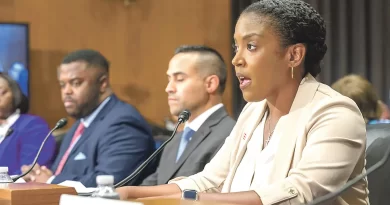
Dr. Robert Roose, president of Community Hospitals for Trinity Health Of New England, put things in perspective and talked at length about ripple effects from these cuts.
“The federal changes are going to directly impact people who get coverage through Medicaid and/or any state-based health insurance exchanges, and that impact is going to be profound for those people and their families,” he explained. “The ripple effects will be felt by all of us … the health systems and the communities we serve will feel the effects in other ways. There could be reductions in access and services, longer wait times, and potential impacts in delivering care.”
Kevin Whitney, who became president and chief operating officer of Cooley Dickinson Hospital in Northampton, a member of Mass General Brigham, last March, agreed.
“We’re concerned about the rising cost of care, especially since COVID,” said Whitney, a registered paramedic and registered nurse who was serving as vice president of Community Operations for the Mass General Brigham Community Division, as well as interim vice president of Patient Care Services and chief nursing officer for CDH, when he was chosen to be its next president and COO. “We always cite a chart showing costs rising at a much higher rate than what we’re receiving for reimbursement, and reimbursement is flat if not decreasing, especially with Medicaid within the Big Beautiful Bill.”
Elaborating, he said that, for a variety of reasons, including the aging of the population, hospitals of all sizes are seeing the percentage of patients covered by commercial payers decrease, with a corresponding rise in those covered by Medicare and Medicaid.

“The ripple effects will be felt by all of us … the health systems and the communities we serve will feel the effects in other ways. There could be reductions in access and services, longer wait times, and potential impacts in delivering care.”
“What we get reimbursed by public payers really doesn’t cover the cost of delivering care,” he went on. “And traditionally, organizations have relied on commercial payers to help offset those losses and enable us to reinvest in our organization and our people.”
Quantifying the matter, he said the OBBA’s total projected impact on Mass General Brigham, when fully phased in, will be between $120 million to $300 million, with $100 million to $200 million from work requirements, and another $20 million to $100 million from Affordable Care Act cuts.
Those are big numbers, and they are expected to generate a strong ripple effect that will impact hospitals in many different ways, said those we spoke with.
For this issue, BusinessWest takes an in-depth look at the many challenges facing hospitals today — and the forecast for the year ahead.
Numbers Game
Hatiras told BusinessWest that, while many hospitals struggled in 2025, HMC did not.
“It’s been a great year for us. We’ve grown our business, revenue is strong, we’ve done well with our workforce — it’s going to be a very strong year for us,” he told BusinessWest, noting that HMC’s fiscal year ended in September, and he didn’t have hard numbers yet.
Breaking down the year and the hospital’s performance, he said there were several factors that went into it, including redesign of the state’s waiver system — which he credited to the Executive Office of Health and Human Services and MassHealth officials — which directed more federal money to providers across the Commonwealth.
“Everyone benefited from this, some hospitals more than others,” he said, adding that HMC’s strong fiscal 2025 was also attributable to growth in primary care and outpatient services, with an expansion of the hospital’s overall footprint with new locations, as well as staff retention and the accompanying reduction in the high costs of turnover.
“If you’re struggling with staffing and temporary staffing, that’s a big hit,” Hatiras noted. “We had less of an issue with that than perhaps others did, and that’s just one of the many factors that contributed to a solid 2025.”
Maybe the biggest factor is that lost status as a best-kept secret, he went on, adding that, while area residents are finding the facility, so too are healthcare professionals.
“We see a lot of people from other surrounding facilities, knocking on our door and saying, ‘do you have any openings? We heard it’s a great place to work,’” he said, adding that, years ago, it was rare to see professionals come to HMC from competing hospitals.

“We have to be as proactive as we can to prepare for and manage the impacts of the Big Beautiful Bill, in particular.”
“Now, it happens on a routine basis,” Hatiras said. “And it’s because of our culture; we’ve built a great culture, and people are taking note.”
Overall, while 2025 was a year of coping with challenges at area hospitals, it was also a time to move forward with several new initiatives in the broad realms of patient care and patient experience, said Whitney, listing, at CDH, everything from new, state-of-the-art MRI imaging services as its Amherst location, which opened last month, to expansion of the Emergency Department, to the resumption of no-cost shuttle service, which takes patients from CDH to Mass General Brigham destination hospitals — Mass General, Brigham & Women’s, and Mass Eye and Ear.
The eight-passenger shuttle departs promptly from the hospital’s Atwood location at 6:30 a.m., leaves the Boston hospitals at 3 p.m., and returns to Northampton around 5 p.m., Whitney noted, adding that this popular service is one of many efforts to improve convenience and overall quality of care.
As for the emergency room expansion, it includes a full imaging suite, which brings benefits for patients and staff alike.
“There’s a new CT machine that’s immediately available to our ED patients, and it’s a great support for our team because it’s right there in the department, as well as ultrasound and diagnostic imaging. So it’s a full imaging suite right there in the department, which makes it more accessible but also more efficient for patients and the team,” he explained. “Before, every patient who needed a CT scan, for example, needed to be transported, with an ED staffer, to the imaging department, which is quite a distance away.”
Such initiatives will help position CDH to better handle what could be additional headwinds in the ED, said Whitney, who, like others we spoke with, said hospitals must do what they can to prepare for what is to come and become more resilient in the wake of those forces.
“We have to be as proactive as we can to prepare for and manage the impacts of the Big Beautiful Bill, in particular. It’s about continuing to be the best of the best in quality, safety, and experience,” he said, citing the overriding goal at CDH, “and also making sure that we’re creating the best environment in which to practice, deliver care, and work and staff appropriately. The more we can retain folks, it will create more of a sense of community, but it will also help us reduce the expenses of turnover, for example.”
Looking Ahead
Roose agreed, returning to the subject of potential — even probable — ripple effects from the federal cuts, and their widespread impact.
“The emergency room is one example,” he said. “When people don’t have coverage, like Medicaid or a similar insurance product, they often can’t go to their primary care provider, so they turn to the emergency room for routine care, which can result in more crowding in emergency departments, delays, and staffing challenges that impact others.
“So that can have a ripple effect in other areas, including even cost, including the cost for those with private insurance because the system isn’t as efficient and now needs to provide care for many people who don’t have coverage,” he went on. “And that can have a ripple effect that can influence operations and staffing and finances.”
It might be several months into 2026 before the full impact of the federal legislation — many pieces of which won’t take effect in April — and those ripple effects are known, but they could be substantial, he continued, adding that it is incumbent upon health systems to prepare as best they can for what is to come.
“The impact is not insignificant, and it’s something we’re actively planning around,” Roose said. “And we won’t know the true impact until it fully plays itself out — it will be well into 2026 until we fully understand the impact.”
Meanwhile, there are many different kinds of headwinds facing hospitals and health systems, some obvious to the public and some less so, said Hatiras, citing, as one example, the state’s Paid Family and Medical Leave (PFML) program, which is certainly impacting his hospital — and, from what’s he’s heard anecdotally, others as well.
“We’re pretty good at spotting icebergs. We’re not like the Titanic; we have people out front looking at icebergs, and we’ve spotted a few in the time that I’ve been here, and this is the next big iceberg coming down — for hospitals and other large employers as well,” he warned, adding that the system has, in his view, become abused.
In the case of hospitals, it leaves them forced to fill staffing voids, often with little notice, and, in the case of nurses and other professionals, with usually expensive options.
“Prior to the PFML being enacted, on average, we had about 20,000 to 25,000 hours of leave that people would take in a year, and that was a little less than 1% of our total work hours,” he said. “Last year, we approached 500,000 hours, a 20-fold increase, amounting to 13% of our total work hours, or the equivalent of more than 230 FTEs.
“Try to wrap your brain around that number … this is out of control,” Hatiras went on, adding that this is not an HMC problem, but an industry problem, one that now has the attention of the Massachusetts Health & Hospital Assoc., which is surveying hospitals to gather information.
Elaborating, he said that, in addition to the leave being used for long-term health matters, it is being used intermittently, maybe a few days a week, for problems such as stress.
“That leaves us in the lurch,” he explained, adding that, with some positions, such as nursing, it leaves the hospital few options other than overtime or agency personnel, which increases costs significantly.
Whether it’s the many expected ripple effects from the OBBBA or growing detrimental repercussions from PFML, 2026 seems certain to be a year of intrigue and challenge for area hospitals — and the full impact of these forces and other headwinds may not be known for several months.