For Medical Residents, Pandemic Adds Intrigue to the Experience
Learning Curves
By George O’Brien
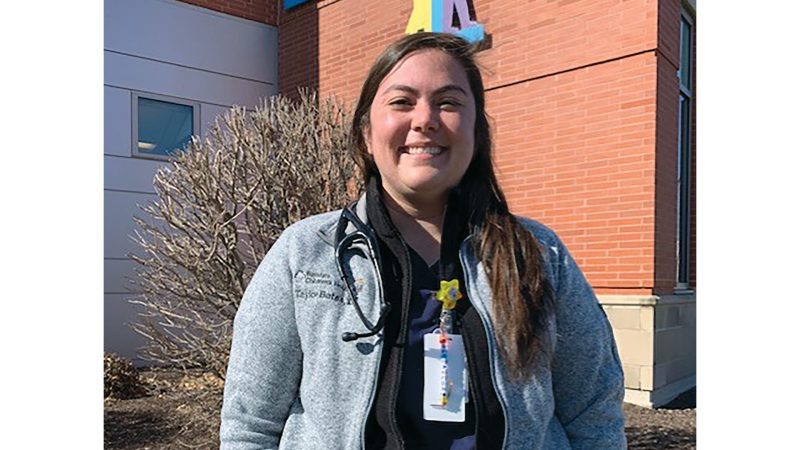
Dr. Taylor Bates started by stating the obvious.
She’s never been a resident when there wasn’t a global pandemic going on, so she obviously doesn’t have anything to compare her current experience to.
Still, she acknowledged that life for all the residents at Baystate Medical Center, the region’s teaching hospital, and the sum of their experiences — from the initial interviews with hospital staff as part of the match process to their current rotations — is far different than it would have been, say, three years ago.
Indeed, those interviews were conducted remotely, said Bates and other first-year residents we spoke with. They were helpful, they said, but certainly not the same as traveling to those hospitals in person, meeting staff, and getting a good feel for the facility and its culture. Meanwhile, since her residency began, many of the learning sessions have been conducted via Zoom, said Bates, a pediatric resident, noting that she longs for in-person learning, and is hopeful it can happen soon.
“We usually have half a day each week where we have lectures — it’s dedicated education time instead of being in clinic or on the floor of the hospital; we get to go in the conference room and just have lectures, look at cases and things, and be with our groups and be with our peers and kind of bond,” she explained. “But we really didn’t get to do that because we weren’t allowed to have big meetings during the pandemic; we got to do a few weeks when things calmed down, before Delta and before Omicon, but since Omicron, we haven’t been able to meet in person. We do Zoom meetings, which is good, but you get Zoom fatigue after so long, and when you’re on for four or five hours at a time, it can be exhausting.”
Today, people believe in more evidence-based medicine. And we provide the evidence for everything. I believe that everything goes through pathology.”
Dr. Ruchi Betel
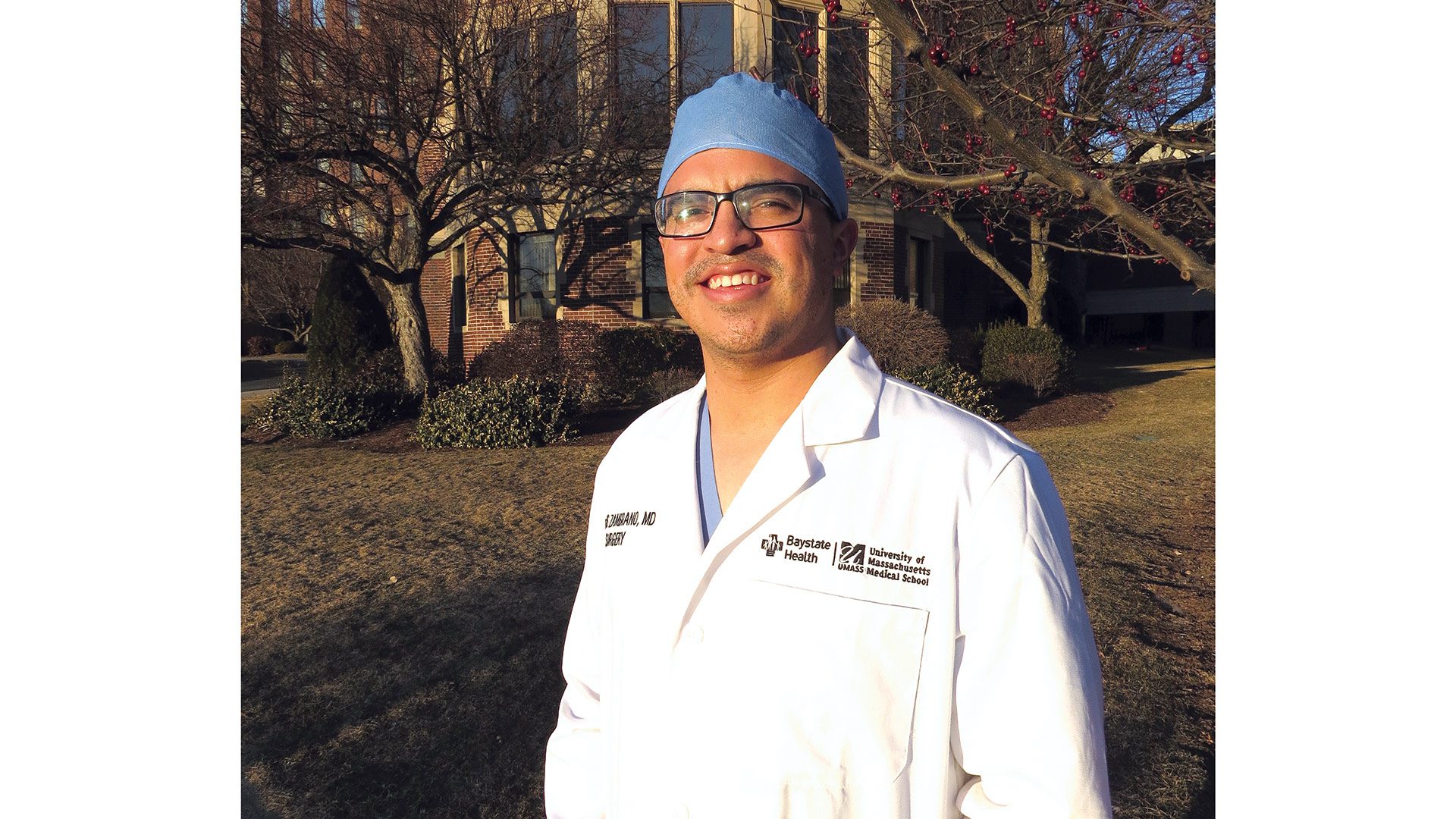
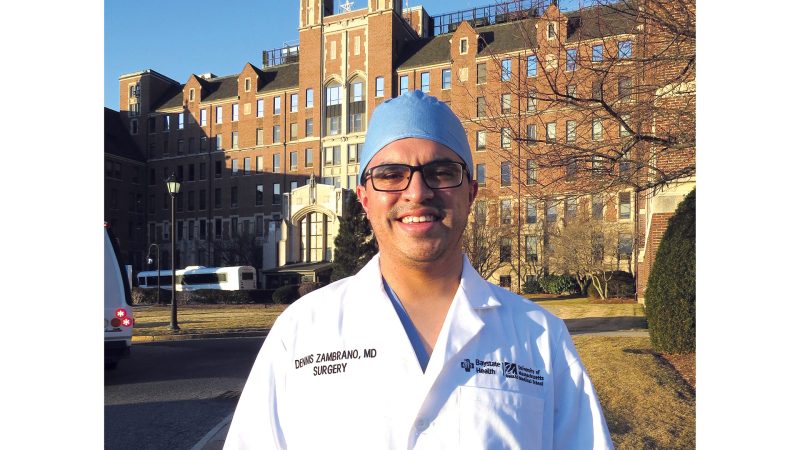
Meanwhile, for Dr. Dennis Zambrano, a surgical resident, the pandemic and its recent forced ban on elective surgery has led to more work on a simulator than with actual patients, although that scene is changing (the restrictions are beginning to be lifted), and he expects to be spending much more time in the operating room.
“We’re going to be back full force with our elective cases,” he explained. “And that’s big; that translates into more OR time.”
While the pandemic has brought some changes to how learning is carried out, and certainly changed many facets of day-to-day operations at hospitals, residency remains a critical time for these doctors. It’s a broad learning experience and an opportunity to gain invaluable experience in their chosen field and perhaps narrow the focus when it comes to how — and even where — they want to spend their careers.
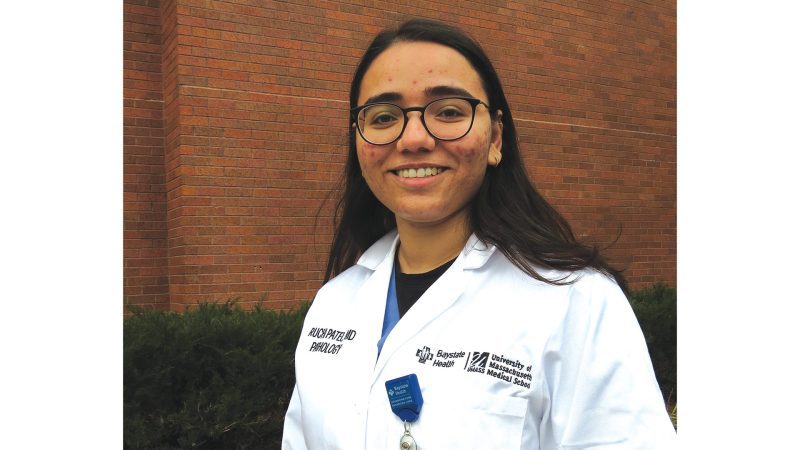
It’s a time to work directly with patients in their chosen specialty — or not, as in the case of Dr. Ruchi Patel, who chose pathology as her specialty, or had it choose her, as is often the case.
“Today, people believe in more evidence-based medicine,” she explained. “And we provide the evidence for everything. I believe that everything goes through pathology.”
For this issue, HCN talked at length with these three residents about how the pandemic has changed their overall experience in some ways, but especially about how this latest step in their medical career is shaping them personally and professionally.
Making Matches
Bates is from Birmingham, Ala. She said that, when she first started looking at potential landing spots for her residency, she focused on hospitals with pediatric emergency medicine fellowships — and facilities in the Northeast. Baystate checked both those boxes, and after considering several options, Baystate became her number-one choice. Match Day — when candidates learn officially which hospital they’ll spend the next several years of their life with — was somewhat nervewracking, but all was good when Baystate was revealed.
She said she chose pediatrics because she’s always wanted to work with children, a constituency she prefers to adults for many of the same reasons as others who choose this career path.
“In a heathcare setting, kids are really cool,” she told HCN. “That’s because they can be comforted, when sometimes adults can’t. A kid can have the same injury as an adult in the emergency room, and if you can make the kid laugh, he forgets that he has a cut on his forehead or maybe that he’s not feeling so well. I find that adults demand more and have more of a fixation on their illness, and so I really enjoy that kids are able to find joy and still laugh. And they tend to get better quickly; they generally have things that we can fix, and they can get on with their lives; even childhood cancer is a lot more curable.”
Overall, COVID has not greatly impacted the work she does while on her various rotations, she said, adding that there are far fewer infections among young people, and most of these are less severe than those with adults.
But the pandemic has impacted life for those patients in the Children’s Hospital, she said — there is less socialization among patients and restrictions on visitation. “It’s hard, especially if the child is sick and they have to stay in this one room the whole time they’re in the hospital.”
Meanwhile, it also impacts the overall learning experience for residents.
Which brings Bates back to those Zoom sessions.
“I think it hurts our peer-to-peer relationships, I think, because we don’t get to see each other as much and talk through things that we need to talk through and vent,” she explained. “It’s been a little difficult, but I don’t think pediatrics hasn’t had it as bad as some of the others, like the internal-medicine folks, because they deal a lot more with COVID itself instead of its impacts.”
Bates said she entered her residency with the goal of specializing in emergency pediatrics, which, as noted, is one of the reasons she chose Baystate. She has also enjoyed working in the Neonatal Intensive Care Unit, or NICU, and is drawn to that work as well.
“I like the procedure component of it; I really like to do things with my hands, rather than prescribing medicine and talking to people,” she explained. “I’d rather do things, which is why I’m drawn to emergency medicine. And in the NICU, you get this adrenaline rush when a baby is delivered and they think they’re going to need NICU support, so they call us down; maybe they need us, maybe they don’t, but you have to be ready for anything. It’s like emergency medicine — you don’t know what’s going to come in on that ambulance.”
Simulating Real Life
As for Zambrano, his family settled in Fitchburg, just northwest of Worcester, and he attended medical school in Rochester, N.Y. When considering hospitals for residency, he wanted to return to Massachusetts, and thus Baystate found its way on his radar screen.
He had been to Springfield only once, several years ago, and had never been to the hospital before, and regretted that COVID made in-person visits to potential landing spots difficult if not impossible.
“With those in-person visits, you get to tour the facility, you get to know the residents one-on-one, and you get to meet with the program director one-on-one as well,” he said, adding that the “virtual equivalent,” as he called it, is effective, but not like the real thing.
“You watch a video tour and talk to residents on Zoom,” he said, adding that he came away from these sessions impressed with Baystate and its commitment to support its residents.
Since arriving in July, he and other surgical residents have certainly been impacted by the cancellation of elective surgeries, but there have been opportunities to practice in the simulation lab, while also getting work in the OR.
“The pandemic has taken us away from the OR, learning from it directly, but it opened up another venue — practicing simulation,” he told HCN, adding that, despite the cancellation of elective surgeries, he has been able to participate in more than 80 procedures in the OR, which puts him on pace to easily meet the requirement that he take part in 200 procedures during his first two years of residency.
That time in the OR, at the bedside, is critical to the overall learning experience, Zambrano went on, adding that “I’m of the mentality that you go the OR to perform, not to practice. The practice happens outside, in the simulator; when we go to the operating room, we also learn, but we’re performing at the same time.”
He anticipates that, with the restrictions on such procedures now lifted, he will getting more valuable opportunities to perform in the ER.
As for his long-term goals, he said he’s still early in his training and getting a feel for what he wants, but he’s interested in the broad realm of vascular surgery.
“I’m still being exposed to new things every day and learning to like new things every day,” he said, adding that this is the essence of the residency experience.
Patel, a California resident before joining Baystate, agreed, noting, as the others did, that the pandemic has changed the learning experiences in some way, but it has not altered the basic mission of a residency — to allow doctors to learn while doing and sharpen the focus of their career path.
Patel said Baystate came onto her radar for several reasons. Her husband is an engineer, she noted, and opportunities for his career figured into the relocation process. A bigger factor, she went on, was the pathology program at Baystate and the support system at the medical center.
Like Bates, she said residents have adapted to Zoom, as difficult as that is in some instances, and that remote learning has some advantages, especially when it comes to saving travel time for regional and national gatherings.
For the pathology residents, there are few other impact points from the pandemic because these individuals are in the lab, not at the bedside, she explained. But while they’re not at the bedside, they are providing that evidence she mentioned earlier that helps all those who are at the bedside.
“Without pathology, you cannot say what a patient has,” Patel said while explaining the importance of this field and the reason she chose it for her career in healthcare. “I don’t think people appreciate pathologists perhaps as much as they should, but I love this subject, and I’m really happy being in pathology.”
She said there are a number of subspecialties in this field, and she is leaning toward surgical pathology, mentioning biopsies for suspected breast cancer and autopsies as examples of work in that field, which is one of many career options she’s exploring.
“I’m still sort of exploring everything,” she said, adding there are several subspecialties she’s considering.
Bottom Line
This process of exploring options and gaining exposure to many different types of career opportunities is one aspect of the residency experience that has not been impacted by COVID.
Residency involves learning and doing — and learning by doing. The pandemic has changed some aspects of how learning and doing are done, but not the essence of the experience.
The residents we spoke with are optimistic about the day when there will be less Zoom and more in-person learning; more time in the OR and less time on the simulator. When that day will come, they don’t know, but in the meantime, they are adapting and preparing for the next stage of their career.